When conversations about prisons arise, the focus is usually on crime, justice, sentencing, and rehabilitation. These are important discussions, but they often overlook one of the most vulnerable groups within correctional facilities—young children living with their incarcerated mothers.
Across Kenya and many other African countries, infants and young children may remain with their mothers in prison during their early years. The arrangement is rooted in an important principle: children need the care, bonding, and emotional security that only a parent can provide during the earliest stages of life.
Yet while this decision protects the mother-child relationship, it also raises difficult questions. How do we ensure these children receive proper nutrition, healthcare, education, stimulation, and opportunities for healthy development while growing up in an environment never designed for childhood?
Perhaps the most important question is this:
How do we protect the rights of children who have committed no offence?
The First Years Matter More Than We Often Realise
Scientists and child development experts agree that the first five years of life are among the most important in a person’s lifetime.
During this period, a child’s brain develops rapidly. Language, emotional regulation, curiosity, social skills, and cognitive abilities are shaped through everyday interactions, play, nutrition, and responsive caregiving.
When children have access to safe spaces, stimulating environments, proper nutrition, healthcare, and loving relationships, they are more likely to reach developmental milestones that influence their future education, health, and wellbeing.
Conversely, prolonged exposure to stress, limited stimulation, poor nutrition, or inadequate healthcare can affect long-term development.
This is why every environment in which a child grows matters—including correctional facilities.
The conversation is therefore not about questioning whether children should remain with their mothers during infancy. Rather, it is about ensuring that wherever these children are, their developmental needs remain a national priority.
Childhood Should Not Be Defined by Circumstance
Children do not choose where they are born.
They do not choose their parents’ decisions.
They do not choose the circumstances that shape their earliest experiences.
Every child deserves the opportunity to play, learn, laugh, and develop regardless of family circumstances.
Unfortunately, children living in prison often experience environments with limited opportunities for exploration compared to those growing up in ordinary communities.
Simple experiences that many families take for granted—playing in open spaces, interacting with other children, visiting libraries, or attending early learning programmes—may not always be available.
These experiences are not luxuries.
They are essential ingredients for healthy childhood development.
Beyond Basic Survival
Supporting children in correctional facilities should never stop at providing food and shelter.
Children require far more than physical care.
Healthy development also depends on:
- Age-appropriate nutrition
- Regular medical care
- Immunisation
- Opportunities for play
- Early learning materials
- Emotional support
- Safe environments
- Positive social interaction
Research consistently shows that play is not simply entertainment.
It is how children learn.
Through play, children develop communication skills, confidence, creativity, emotional resilience, and problem-solving abilities.
Creating child-friendly spaces within correctional facilities can therefore make a significant difference during these critical years.
Why This Matters for Kenya
Kenya has made important progress in advancing children’s rights through its Constitution, child protection laws, and commitments to international conventions.
The country recognises that every child has the right to protection, healthcare, education, and development.
These principles apply equally to children whose mothers are incarcerated.
As a society, we are challenged to ensure that children are not disadvantaged because of circumstances entirely beyond their control.
Protecting vulnerable children is not about excusing crime.
It is about recognising innocence.
A compassionate justice system can uphold accountability while still protecting children.
These two goals are not mutually exclusive.
Supporting Mothers Supports Children
Mothers living in correctional facilities face unique emotional and practical challenges.
Many worry about providing adequate care for their children while navigating life in prison.
When mothers receive parenting support, counselling, healthcare, nutrition, and opportunities to engage positively with their children, the benefits often extend directly to the child.
Healthy attachment during early childhood contributes to stronger emotional development and resilience later in life.
Supporting mothers is therefore also an investment in children’s futures.
The Role of Communities
It is easy to assume that correctional facilities alone should meet every need.
In reality, lasting support often requires partnerships.
Civil society organisations, healthcare providers, educational institutions, volunteers, faith organisations, and businesses all have meaningful roles to play.
Communities can contribute by providing:
- Children’s books
- Educational toys
- Hygiene supplies
- Nutritional support
- Parenting resources
- Volunteer reading programmes
- Health outreach services
- Early childhood learning activities
These contributions may appear modest, but together they create environments where children experience care, dignity, and hope.
Changing the Narrative
Perhaps one of the greatest challenges is public perception.
Children living in prison with their mothers are often invisible in public conversations.
Their stories rarely appear in headlines.
Their needs rarely dominate policy discussions.
Yet these children represent an important reminder that justice systems must also consider humanity.
Protecting vulnerable children is not an act of charity.
It is a reflection of our values as a society.
When communities acknowledge these children’s existence and advocate for their wellbeing, they help ensure that no child is forgotten simply because their story unfolds behind prison walls.
A Better Future Begins with Small Acts of Compassion
Meaningful change does not always require sweeping reforms.
Sometimes it begins with practical actions.
A donated storybook.
A nutritious meal.
A child-friendly play area.
A volunteer spending time reading to children.
A health check-up.
A caregiver receiving parenting support.
These seemingly ordinary acts create extraordinary outcomes over time.
Every positive interaction contributes to healthier childhood development.
Every opportunity to learn builds confidence.
Every act of kindness reminds a child that they matter.
Our Commitment
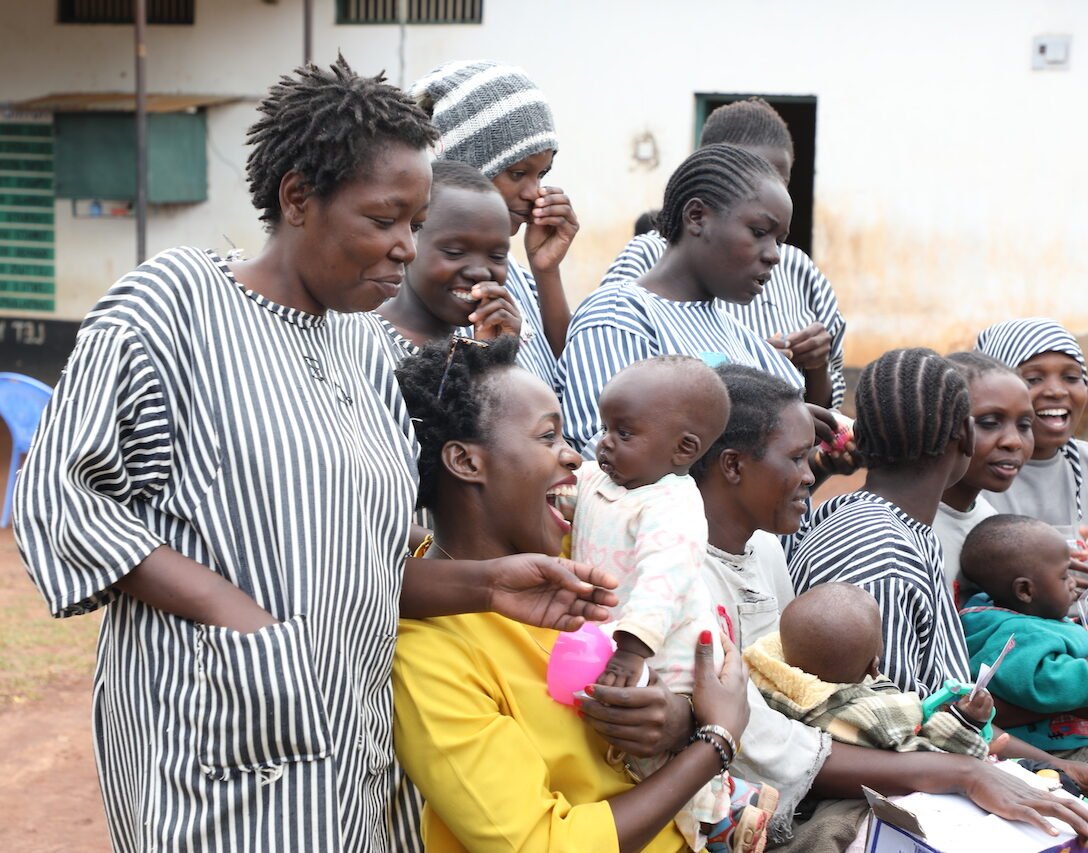
At Change A Life Initiative, Empower Her Wellness focuses on supporting children residing in prison with their incarcerated mothers.
Every quarter, we visit women’s correctional facilities to provide resources that promote the health, dignity, and development of these children.
Our goal is simple.
We want every child—regardless of where they spend their earliest years—to enjoy opportunities for healthy growth, learning, and emotional wellbeing.
Because childhood should never be defined by prison walls.
Looking Ahead
The measure of a compassionate society is often found in how it treats those with the least power.
Few groups are more vulnerable than children whose lives begin inside correctional facilities.
They have committed no crime.
They deserve no punishment.
They deserve care.
They deserve opportunity.
They deserve the chance to dream beyond the walls that surround them today.
As Kenya continues to strengthen its child protection systems, there is an opportunity to ensure that these children are no longer invisible.
By investing in early childhood development, supporting mothers, strengthening partnerships, and creating child-friendly environments, we can help ensure that every child has the opportunity to grow into a healthy, confident, and productive member of society.
Compassion does not weaken justice.
It strengthens humanity.


